The ARM Takeover Is Complete — What It Means for Developers

The x86 era is not over, but it has lost the momentum. The shift that Apple started in 2020 with the M1 has completed its first arc: ARM-based silicon now dominates the high-performance laptop market, is the cost-performance leader in cloud compute, and is rapidly infiltrating the data center. If you write software professionally, ignoring this transition is no longer viable.
How We Got Here
Apple Silicon was the visible inflection point, but the pressures driving it had been building for a decade. x86 power efficiency had plateaued. Intel's process technology roadmap had repeatedly slipped. And ARM Holdings had been quietly improving the ISA and licensing it to increasingly sophisticated chip designers — Apple, AWS, Qualcomm, Microsoft, Ampere — who were outpacing Intel's in-house teams on performance-per-watt.
The M1's performance metrics in late 2020 were not incremental. Single-core performance matched or exceeded Intel's fastest laptop chips at roughly half the power draw. The M1 Pro, M1 Max, M2, M3, and now M4 series have compounded that lead. The MacBook Pro is now the default machine for a large percentage of professional developers, not because of Apple loyalty, but because the hardware is objectively better for most workloads.
AWS Graviton: The Cloud Story
On the cloud side, AWS Graviton has been the most consequential development for production infrastructure. Graviton3 instances (C7g, M7g, R7g) launched in 2022 offered 25% better compute performance and up to 60% better energy efficiency than comparable x86 instances at a 10–20% lower price point. Graviton4, launched in 2024, pushed further — claiming up to 40% better performance than Graviton3 for compute-intensive workloads.
The pricing differential matters for anyone running significant cloud spend. A C7g.xlarge (Graviton3) costs $0.1360/hour on-demand versus $0.1700/hour for a comparable C6i.xlarge (Intel Ice Lake) — roughly 20% cheaper before you factor in the performance per dollar. At scale, this is not a marginal difference. Organizations running multi-million dollar AWS bills have moved 50–80% of their fleet to Graviton and are reporting meaningful cost reductions.
Microsoft's Cobalt and the Hyperscaler Pattern
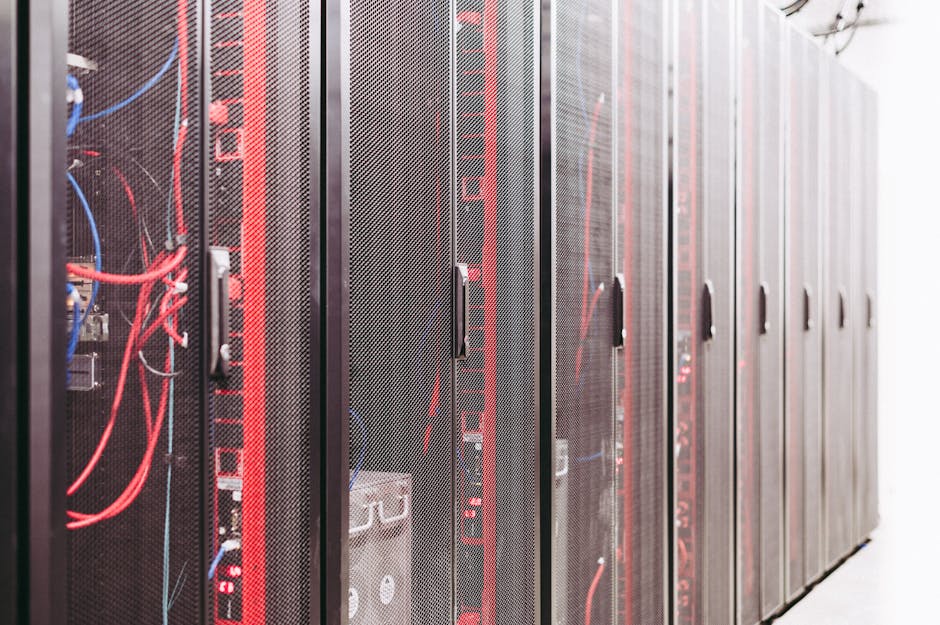
Microsoft's Cobalt 100 — their custom ARM-based chip for Azure — went into production in late 2023. Google has its Axion processor. Meta has started custom silicon work. The pattern is clear: every major hyperscaler is vertically integrating their compute at the chip level, and they are all doing it on ARM.
This is not coincidence. The economics of custom ARM silicon for hyperscalers are compelling: ARM's licensing model gives them control over microarchitecture decisions that are specific to their workload mix, and ARM's power efficiency allows higher rack density. When your data center has hundreds of thousands of servers, shaving 15 watts per server translates to tens of millions of dollars in annual power costs.
What This Means for the Software You Write
The Compatibility Problem (Mostly Solved)
The biggest concern two years ago — binary compatibility — is now largely a non-issue for most software stacks. The major language runtimes (Node.js, Python, Go, Java, Rust, .NET) all have ARM64 builds that are well-tested. Docker supports multi-arch images with buildx. GitHub Actions and most CI providers support ARM runners. If you are writing in a high-level language, your code almost certainly runs on ARM without modification.
Where it still bites: native extensions, compiled C libraries embedded in Python packages, and any code with x86-specific SIMD intrinsics hardcoded. If you have a data science stack with obscure native dependencies, test it on ARM before you migrate — there are still rough edges.
Build Pipelines Need Updating
The most immediate practical change for most teams: Docker images built on x86 run on ARM via QEMU emulation, but emulated x86 on ARM is slow — sometimes 3–5x slower for compute-heavy operations. If you are building images that will deploy to Graviton or Apple Silicon, you need native ARM builds.
The right move: add ARM64 to your docker buildx build targets and push multi-arch images to your registry. The GitHub Actions ARM runners (now generally available for public repos) make this straightforward to add to existing CI pipelines. A linux/amd64,linux/arm64 build matrix adds maybe 10 minutes to a typical CI pipeline and future-proofs your images.
The Development-Production Parity Win
If your team is on Apple Silicon (M-series Macs) and your production runs on Graviton, you have ARM-to-ARM parity in development and production for the first time. This eliminates an entire class of "works on my machine" bugs related to architecture differences. Native ARM development environments running against native ARM production is a meaningfully better situation than the x86 emulation or architecture mismatch that most teams dealt with from 2020–2023.
The Software You Run on Servers
For common infrastructure software, ARM support is now first-class: PostgreSQL, Redis, Nginx, Kafka, Elasticsearch — all have battle-tested ARM64 builds. The tail risk is specialized proprietary software or legacy enterprise tools where vendors have not prioritized ARM builds. If you run anything in that category, check vendor support status before a Graviton migration.
The trajectory is clear. ARM is not a niche architecture anymore — it is the efficient frontier of compute for both client hardware and cloud infrastructure. The developers who understand what that means for their build pipelines, their dependency stacks, and their production deployments are going to be running faster, cheaper, and more reliably than the ones still thinking of ARM as "the Mac thing."